White Rose
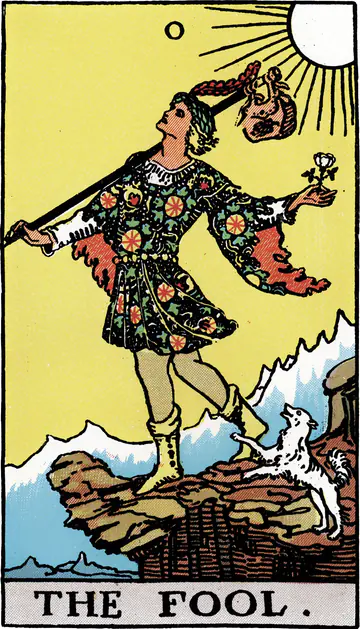
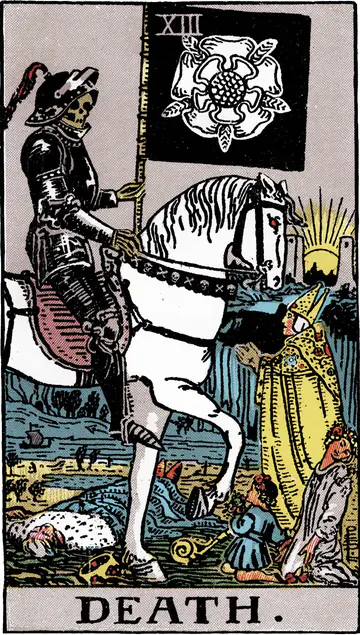
White Rose PlantsPure intention and innocence. The Fool holds one; Death embroiders it on a black banner — beginning and end share one flower: the pure state of letting go of clutter.
The recurring visual motifs of the Rider–Waite–Smith deck — the same symbol carries a consistent meaning across cards. Browse by category or search a symbol or keyword; once you know them, the whole deck becomes readable.
Pure intention and innocence. The Fool holds one; Death embroiders it on a black banner — beginning and end share one flower: the pure state of letting go of clutter.
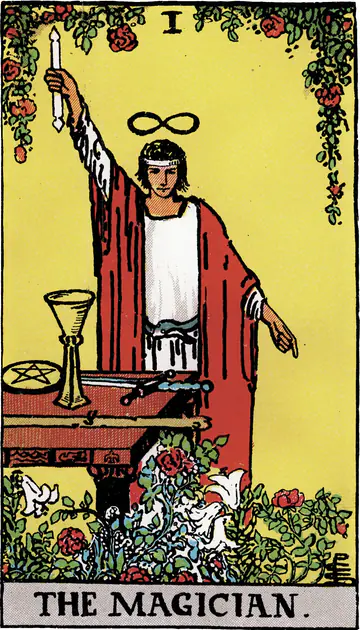
In The Magician's garden both bloom: red roses are desire and passion, white lilies are pure thought. The work of will needs both at once.
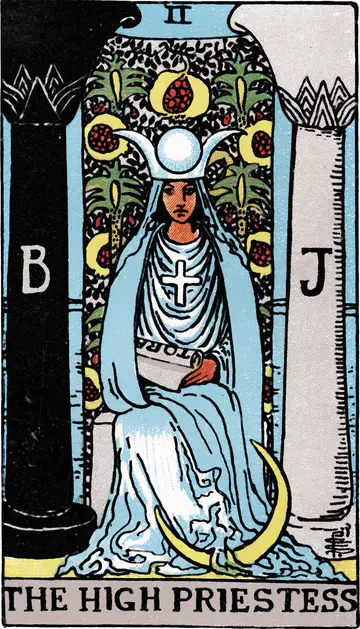
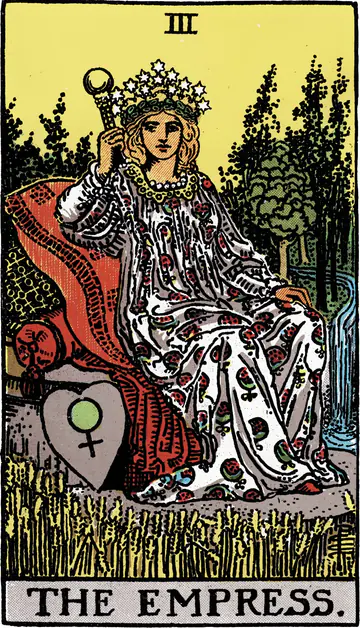
On The High Priestess's veil and The Empress's robe — Persephone's fruit: fertility, the unconscious, and knowledge you cannot un-taste once tasted.
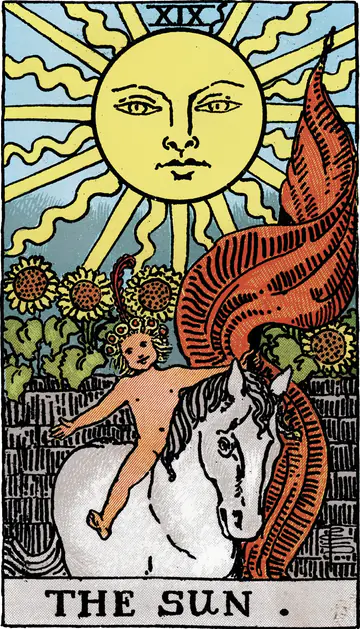
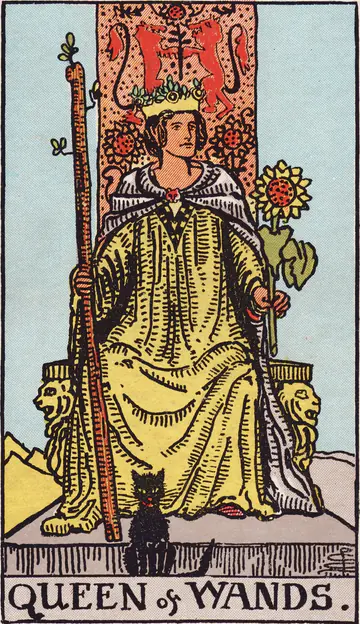
On The Sun's wall, beside the Queen of Wands — unreserved vitality and frankness. Always turned toward the light, never doubting it exists.
Death rides one; The Sun's child rides one — the mount of pure force. Death and rebirth ride the same horse, one of the deck's deepest echoes.
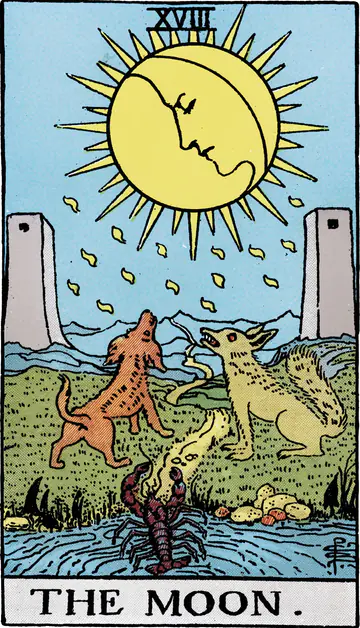
The Fool's small dog is domesticated instinct, loyally warning of the cliff; in The Moon, dog and wolf howl together — two faces of one instinct, tame and wild, both calling to the unconscious.
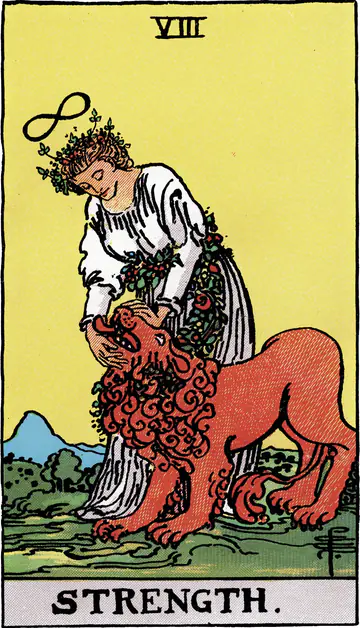
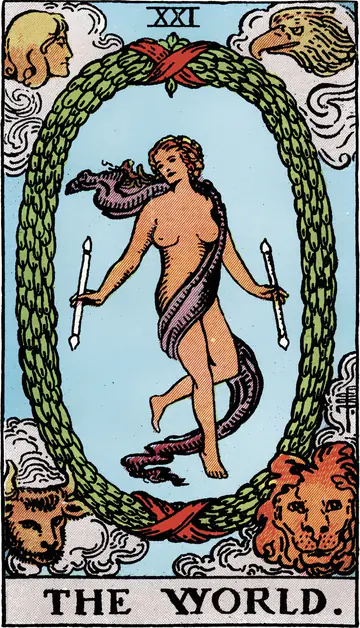
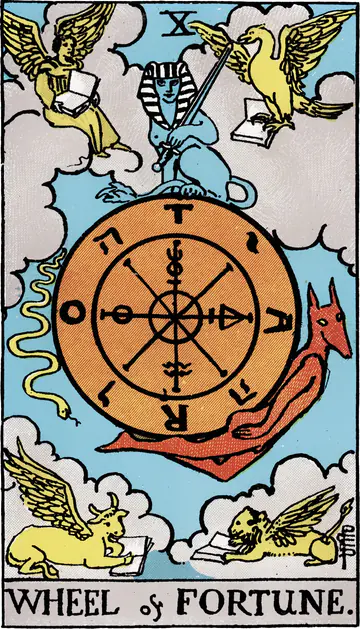
In Strength, the beast whose jaw the maiden gently holds — not suppression but reconciliation with one’s animal nature. It also guards the fiery corner of The World.
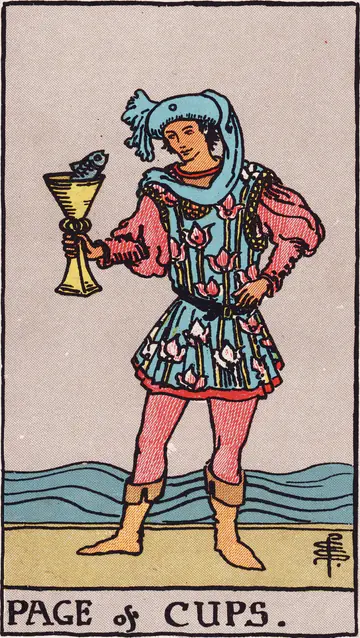
The fish leaping from the Page of Cups’ cup is inspiration surfacing from the unconscious — an unexpected message delivered by feeling and intuition.
The shelled creature crawling from The Moon’s pool: half-formed fears rising from the deepest unconscious — it asks, "what are you afraid of that you can’t yet name?"
Smith's skies speak: golden backgrounds (The Sun, The Magician) are bright conscious moments; lead-grey (common in Swords) is cloudy thought. Same event, different sky — wholly different emotional tone.
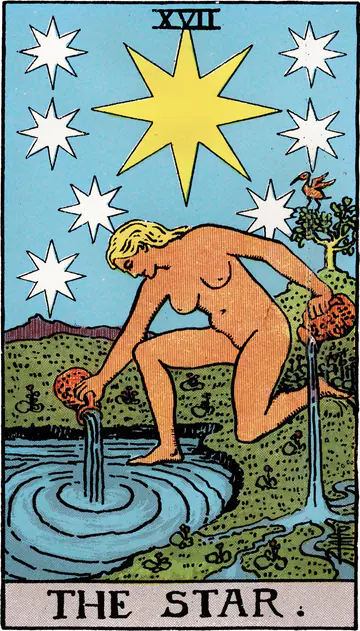
The Star's great eight-pointed star and seven small ones: hope, guidance, cosmic order. Where stars appear, there is still a direction to follow in the dark.
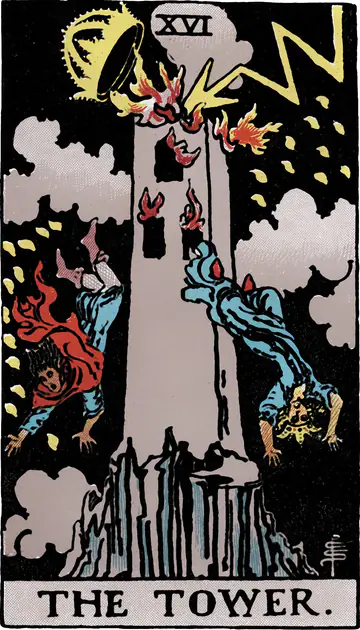
The bolt striking The Tower — sudden, non-negotiable truth and upheaval. What it destroys is usually built on false foundations.
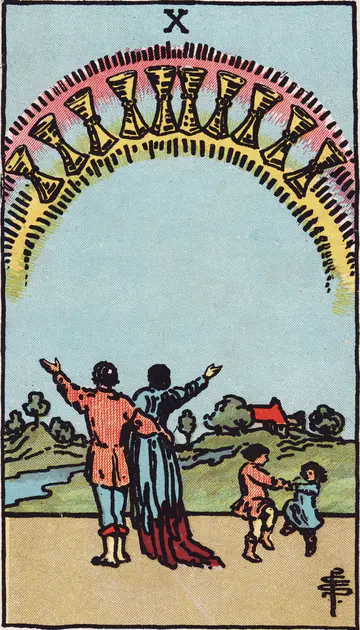
The rainbow arching over the family in Ten of Cups — heaven’s blessing after emotional fulfilment: the settled completeness that comes once the hardship is past.
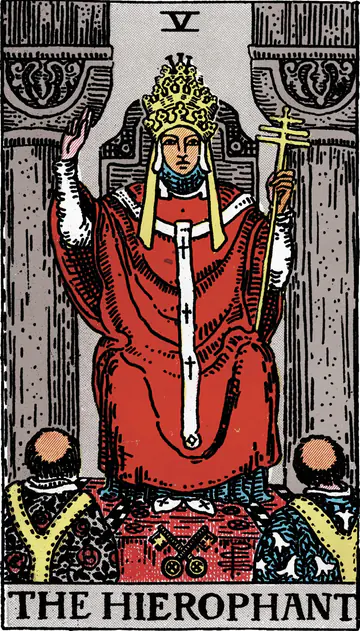
The High Priestess's black-and-white pillars; the columns beside Justice and The Hierophant — paired pillars mark a threshold: pass between opposites (light and dark, mercy and severity) to reach what lies deeper.
Authority and attainment — but note who wears it and whether it sits steady: the crown struck from The Tower is the bluntest image of authority built on false ground.
The lemniscate over The Magician and the Strength maiden: endless, self-renewing energy and effortless rhythm — power lies not in force but in continuity.
On The Magician's table lie wand, cup, sword and pentacle at once — the four elements, the whole Minor Arcana in miniature: everything is present, awaiting the will to wield it.
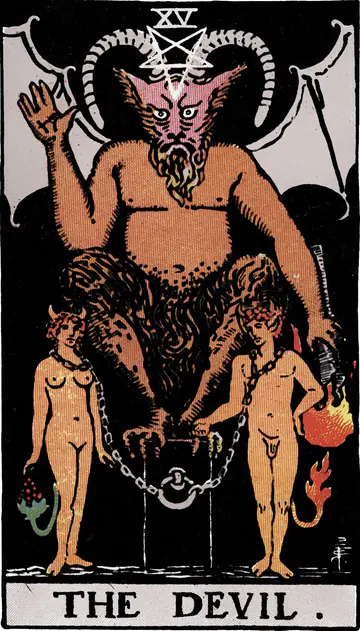
The chains on the necks of the figures beneath The Devil — seemingly bound, yet loose enough to lift off at any time. Bondage is mostly self-worn; the door out was never locked.
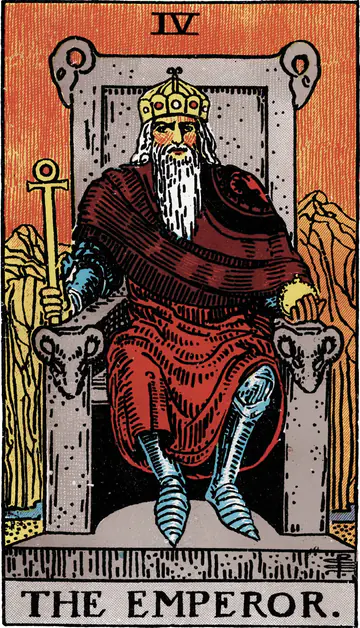
Many figures wear white within, red without (The Magician, The Emperor): white is pure spirit, red is action and blood. White within, red without = outward action driven by pure intent.
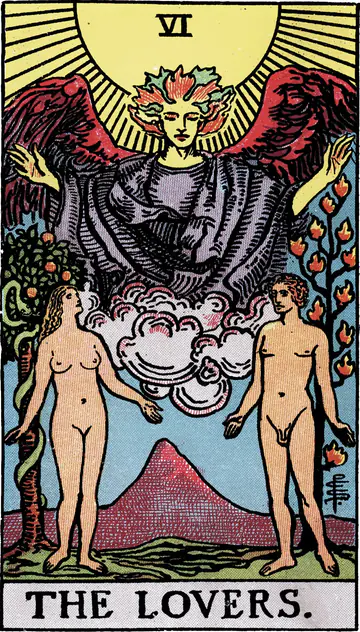
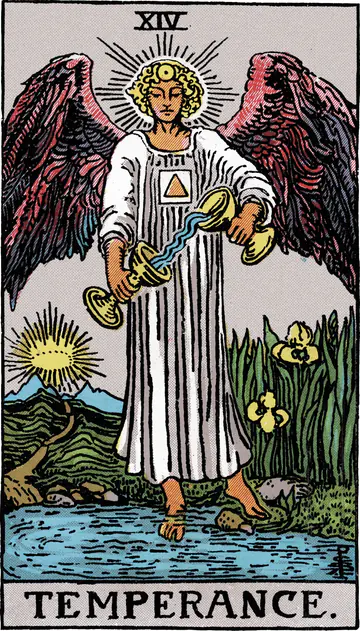
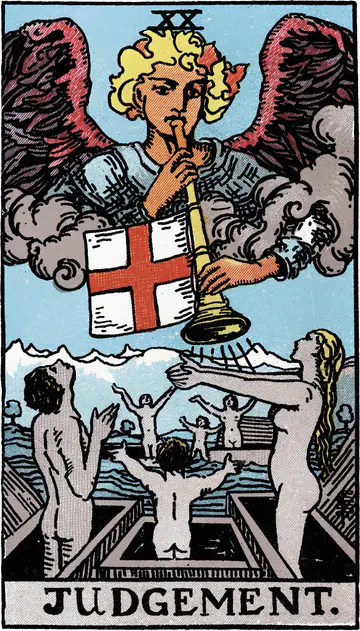
The Lovers' Raphael, Temperance's angel, Judgement's Gabriel — where wings appear, a guidance higher than personal will is present: choice, balance and calling each bear a divine witness.
The Fool steps bare-foot at the cliff, The Star maiden stands bare-foot by the water — to remove shoes is to remove defence: candour and vulnerability, in full contact with earth and truth.
Behind The High Priestess's veil, between Temperance's cups, in The Star's pool — water always points to emotion and the unconscious. Note its state: calm (mastery), rushing (loss of control), absent (itself a clue).
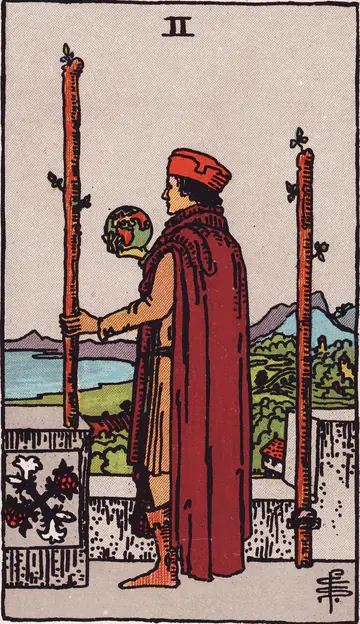
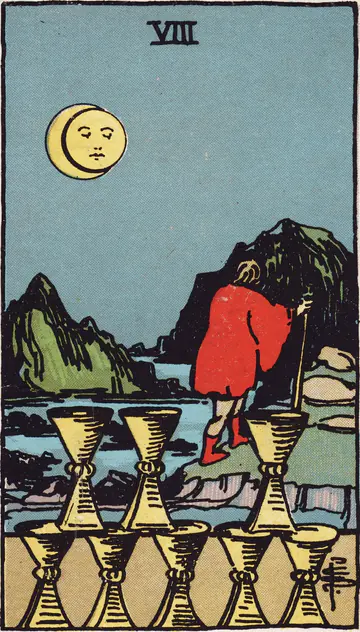
In Two of Wands' vista, behind the figure leaving in Eight of Cups — a far grey structure: achievement already gained, or security left behind. Are you gazing toward it, or walking away?
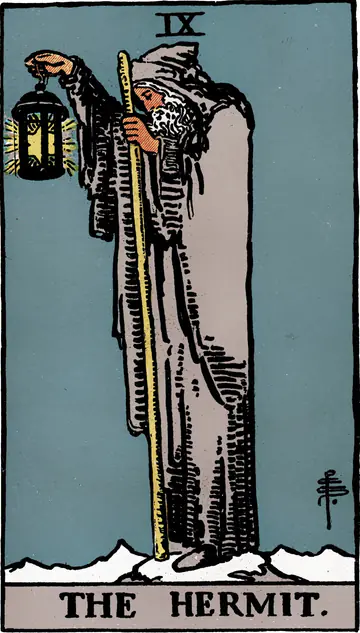
Before The Fool, beneath The Hermit, on The Star's horizon — peaks not yet reached: trials ahead and higher states. Both a challenge and a reminder that there is still far to go.
Get new articles and readings via RSS. No ads, no sign-up.